New Settlement Board Proposed
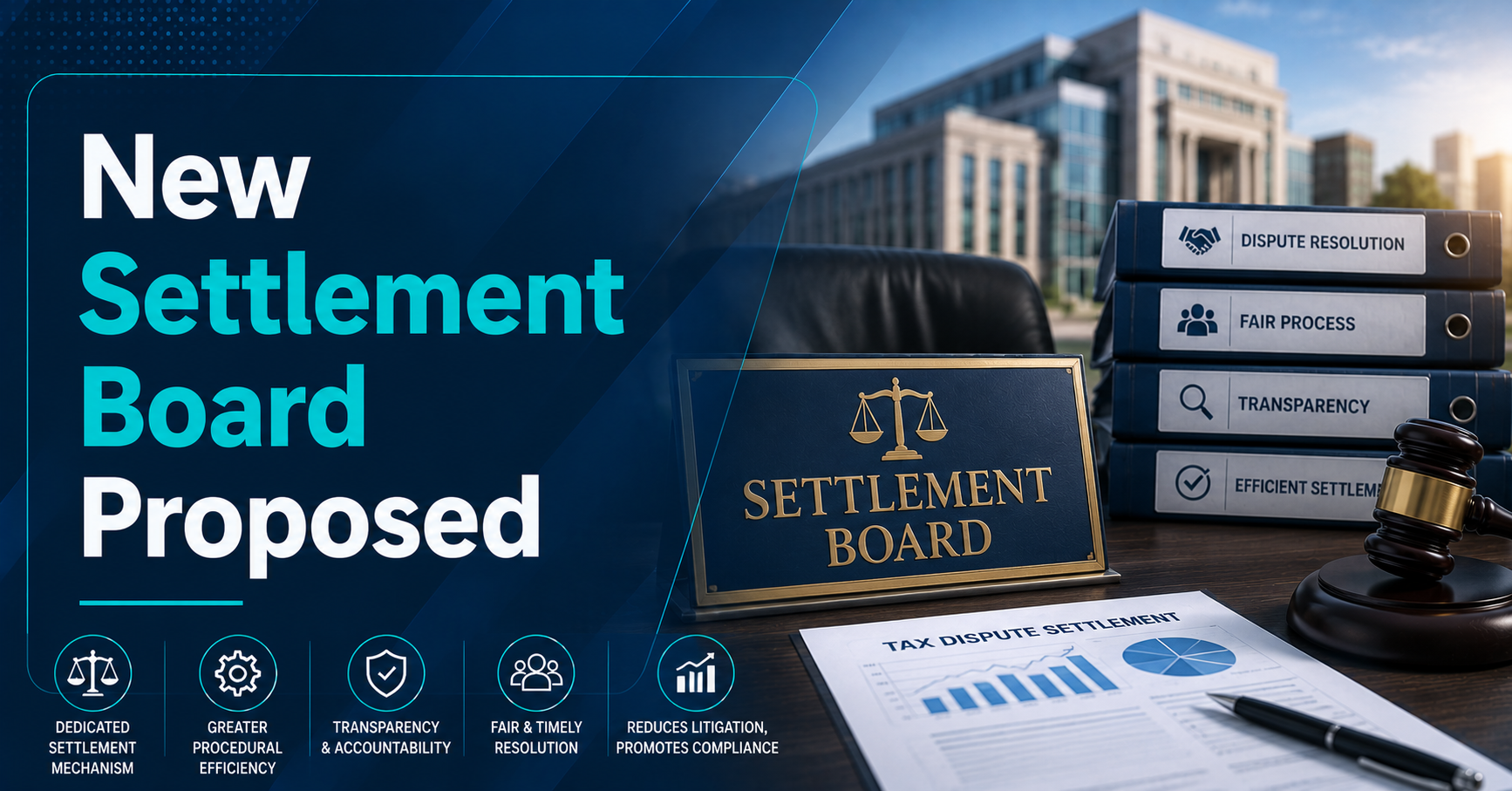
New Settlement Board Proposed for Tax Dispute Resolution
The Taxation and Other Laws (Amendments) Bill, 2026 proposes replacing the existing Interim Board framework with a regular Settlement Board for eligible tax settlement matters. The proposal is aimed at creating a more stable mechanism for resolving disputes and reducing prolonged tax litigation.
Why Is a Settlement Board Being Proposed?
The Income-tax Settlement Commission was discontinued through amendments made in 2021, with an Interim Board for Settlement being constituted to deal with eligible pending settlement applications.
The proposed 2026 amendment seeks to move from this interim arrangement towards a regular Settlement Board. This would provide a dedicated institutional mechanism for eligible taxpayers seeking settlement of tax disputes.
The proposal is intended to provide:
- Greater procedural clarity.
- A dedicated framework for settlement of eligible cases.
- More efficient handling of pending matters.
- Greater certainty for taxpayers and the tax administration.
- An alternative to prolonged litigation in appropriate cases.
The existing Interim Board framework was introduced after the Finance Act, 2021 discontinued the Settlement Commission for new applications and provided for Interim Boards to deal with specified pending matters. Courts have subsequently considered several issues concerning the functioning and jurisdiction of the Interim Board.
Potential Benefits for Taxpayers
A regular Settlement Board could be particularly relevant where taxpayers prefer resolution through a settlement mechanism rather than continuing through multiple stages of tax litigation.
Potential benefits include:
- Faster resolution of eligible disputes.
- A more clearly defined settlement procedure.
- Reduced uncertainty associated with prolonged proceedings.
- Better administrative continuity compared with an interim arrangement.
- Greater opportunity for eligible taxpayers to resolve disputes in accordance with the prescribed settlement framework.
However, the precise eligibility conditions, application procedure, powers of the proposed Board and treatment of pending matters will depend on the final enacted provisions and rules.
Important: This Is Still a Proposal
Taxpayers should not assume that the proposed Settlement Board is already operational. The measure is contained in the Taxation and Other Laws (Amendments) Bill, 2026 and must be considered subject to the legislative process.
Accordingly, businesses and individuals involved in tax disputes should continue following the existing applicable remedies and statutory timelines until the amendment is enacted and brought into force.
What Should Taxpayers Do?
Taxpayers with ongoing or potential tax disputes should:
- Review the current status of their proceedings.
- Preserve assessment orders, notices, submissions and supporting documents.
- Evaluate available appellate and settlement options under the law currently in force.
- Monitor the final provisions of the 2026 Bill and any rules or notifications issued subsequently.
- Obtain professional advice before changing litigation strategy based solely on the proposal.
Conclusion
The proposed Settlement Board represents a potential shift towards a more permanent and structured mechanism for tax dispute settlement. If enacted with appropriate procedural safeguards, it could help eligible taxpayers obtain greater certainty and reduce the burden of prolonged tax litigation.
Since the proposal is not yet the final law, taxpayers should await the enacted provisions and applicable rules before relying on the new mechanism.
For expert guidance on this topic, contact your tax professional today.
Have Questions? We're Here to Help
Get expert advice from TAX AVIJIT. Reach out to discuss your requirements.