
CBDT NOTIFIES FOREIGN ASSETS DISCLOSURE SCHEME, 2026
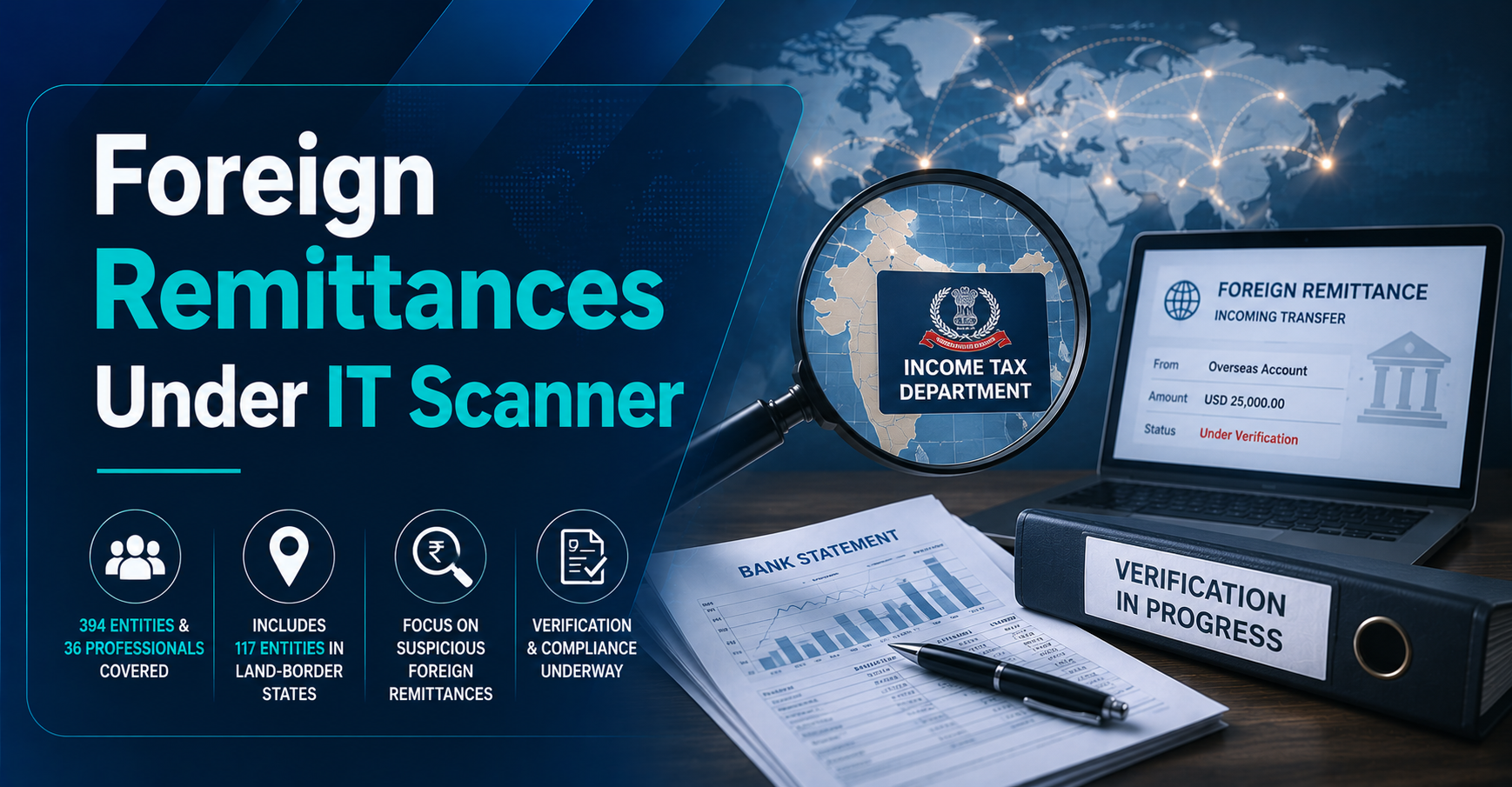
Foreign Remittances Under Income Tax Scanner: CBDT Verification Exercise
The Central Board of Direct Taxes (CBDT) has launched a nationwide verification exercise into certain foreign remittances identified through data analysis and ground-level intelligence. The exercise highlights the increasing importance of maintaining proper documentation and exercising due diligence in cross-border transactions.
394 Entities and 36 Professionals Under Verification
According to the CBDT Press Release dated 18 August 2026, the Income Tax Department's exercise covers approximately:
- 394 entities, including 117 entities located in States along India's land borders.
- 36 professionals who issued certificates relating to foreign remittances.
The Department stated that the exercise is focused on entities suspected of making significant outward remittances despite having little or no reported business activity, as well as the persons behind such entities and professionals involved in certifying the transactions. Further investigations are underway.
What Triggered the Verification?
The Department stated that its analysis of outward-remittance data over the preceding three years identified entities that either did not file income-tax returns or reported very small turnovers.
In some cases, the reported turnover appeared to have no apparent correlation with the large amounts remitted overseas. The stated purposes of payments, including freight, software imports and consulting services, were also examined.
Ground-level intelligence reportedly indicated that some entities were not operating from their declared addresses. These indicators prompted further verification of the entities, the underlying transactions and the persons connected with them.
Form 15CB and Professional Due Diligence
The CBDT has also highlighted the role of professionals who issued Form 15CB certificates.
The Department's analysis found that a relatively small group of professionals had issued a large number of Form 15CB certificates, while the remitted funds were received by a clustered group of entities. This has led to examination of whether appropriate due diligence was undertaken before certification.
Under the existing framework, Form 15CB is relevant to specified foreign remittances and requires the accountant to examine the taxability of the payment with reference to the books of account and relevant supporting documents. The corresponding framework under the Income-tax Rules, 2026 uses Form 146.
CBDT has specifically advised professionals issuing Form 15CB/Form 146 to exercise:
- Due care.
- Appropriate diligence.
- Professional judgment.
- Proper examination of the underlying transaction and relevant facts.
What Should Businesses Do?
The CBDT exercise does not mean that legitimate foreign remittances are prohibited or inherently suspicious. Businesses routinely make genuine overseas payments for imports, software, freight, consultancy and other commercial purposes.
However, businesses should ensure that their transactions are supported by a clear documentary trail, including, where relevant:
- Agreements, purchase orders and invoices.
- Proof of receipt of goods or services.
- Bank and payment records.
- Accounting entries and supporting books.
- Documentation supporting the commercial purpose of the payment.
- Appropriate taxability and withholding-tax analysis.
- Relevant Form 15CA/15CB or corresponding documentation.
Businesses should also ensure that their books, income-tax returns, banking transactions and actual business activities present a consistent picture.
Key Takeaway for Tax Professionals
The development is particularly relevant for professionals involved in foreign-remittance certifications. A certificate should be issued only after the underlying transaction, relevant documents and tax implications have been properly examined.
The CBDT's action demonstrates the increasing use of data analytics to identify inconsistencies across financial and tax information. Professionals and taxpayers should therefore focus not merely on formal compliance, but also on the substance and documentary support for cross-border transactions.
Conclusion
The CBDT's nationwide verification exercise involving 394 entities and 36 professionals signals increased scrutiny of potentially unexplained foreign remittances. Genuine businesses should not be alarmed, but they should ensure that overseas payments are commercially justified, properly documented and correctly reported.
Further investigations are currently underway, and taxpayers or professionals receiving queries should respond carefully after reviewing the underlying records.
For expert guidance on this topic, contact your tax professional today.
Have Questions? We're Here to Help
Get expert advice from TAX AVIJIT. Reach out to discuss your requirements.